
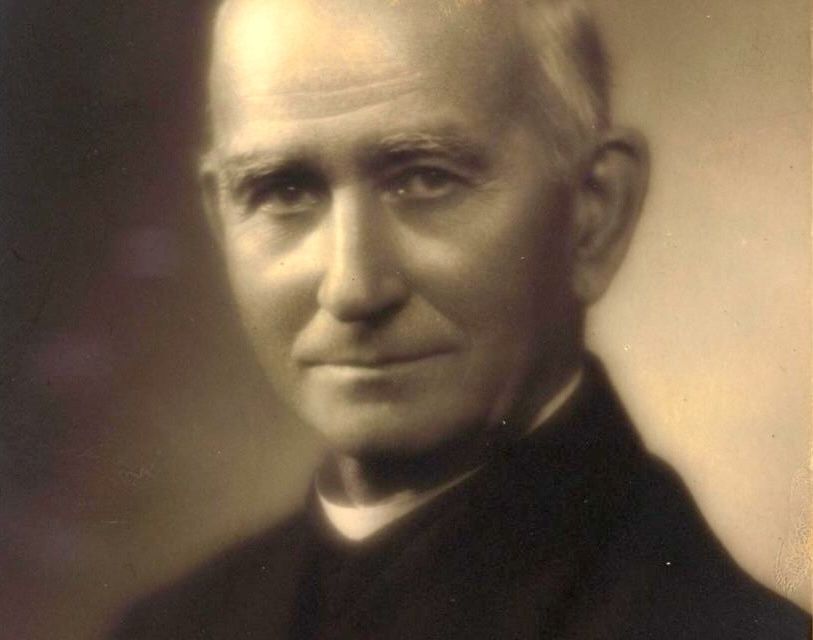
Abbé Chaupitre, a Pioneer of Homeopathy
— EN
A Vocation Born from Hardship
Born in 1859 in Gennes-sur-Seiche, Jean-Marie-Victor Chaupitre grew up in a modest rural environment. Frail in health, he chose the religious path rather than agricultural work. Ordained as a priest in 1894, his life took a decisive turn when he suffered from a severe stomach ulcer.
His recovery, thanks to homeopathic treatment administered by Abbé Chauvel, profoundly influenced him. Convinced by this experience, he decided to devote his life to this therapeutic approach. From that moment on, he embraced a simple but powerful idea: medicine should aim above all to relieve suffering in an effective and accessible way.
A Passionate Advocate of Homeopathy
Settling in Rennes in 1908, Chaupitre developed an intense healing practice. He created remedies known as the “drops of Abbé Chaupitre”, based on a “complexist” form of homeopathy that combined multiple substances to address various symptoms.
Despite lacking formal medical qualifications, he gained increasing popularity among the public. His success rested on several positive aspects that defined his approach:
a strong commitment to making healthcare accessible to everyone,
a pragmatic focus on patients’ perceived results,
a talent for popularizing homeopathy, still relatively unknown at the time.
Through his work, he played a significant role in spreading homeopathy in early 20th-century France.
An Innovative and Popular Approach
Chaupitre went beyond individual care by organizing a structured system around his remedies. With collaborators such as pharmacist Louis Maupy, he established a laboratory and expanded production.
He also demonstrated a modern sense of communication:
publishing almanacs combining health advice with educational content,
developing a recognizable brand identity,
distributing his products through pharmacies.
These initiatives made him a forerunner of industrial homeopathy and its commercial distribution, long before the field became fully organized.
A Mission Focused on Relieving Patients
At the heart of Chaupitre’s work was a clear goal: to relieve suffering. He developed numerous formulas tailored to a wide range of conditions, including remedies for common ailments and specific health concerns.
His efforts took place in a time when access to healthcare was limited for many people. In this context, he stood out as a figure close to the population, attentive to their needs and determined to provide practical solutions.
A Lasting Legacy
Chaupitre’s influence extended well beyond his lifetime. After his departure and death in 1934, his laboratory continued to grow:
scaling up the production of his remedies,
maintaining a range of products for decades,
gradually integrating into the modern pharmaceutical industry.
The company eventually evolved into the Laboratoire Homéopathique Complexe, later becoming part of larger groups such as Arkopharma and Boiron.
This continuity reflects the enduring impact of his work. Some of his formulations, adapted over time, remained in use well into the modern era.
A Key Figure in the History of Homeopathy
Today, Abbé Chaupitre is recognized as an important figure in the history of homeopathy in France. At a time when the discipline was still seeking recognition, he helped to:
popularize an alternative form of medicine,
structure its large-scale distribution,
pave the way for more accessible healthcare practices.
His epitaph captures the essence of his life’s mission: he dedicated himself to “relieving human suffering.”
Abbé Chaupitre stands as a unique figure at the crossroads of faith, innovation, and popular medicine. His journey illustrates how personal experience can inspire a broader humanitarian mission.
A bold pioneer, he left a lasting mark on French homeopathy—not only through his remedies, but also through his vision: making healthcare simple, accessible, and centered on patients.