
The origins of the Poconéols and Father Jean-Louis Bourdoux
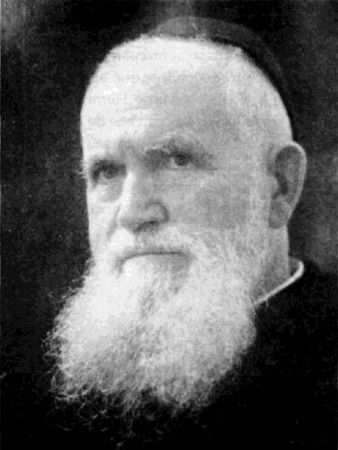
A missionary with an extraordinary destiny
The history of the Poconéols is inextricably linked to that of Jean-Louis Bourdoux, a French missionary priest of the early 20th century. Trained at a very young age at the seminary, notably with the Franciscans at Ambialet in the Tarn, he stood out for his early vocation and a spirit of openness that was unusual for his time.
In 1905, aged around thirty and still weakened by pulmonary tuberculosis, he set off on a mission to Brazil. After a long journey lasting several months, he reached the remote region of Mato Grosso, in the village of Poconé. It was there that his fate took a turn: suffering a severe relapse, he was treated by indigenous healers, the curandeiros, who used local plants.
The discovery of traditional Amazonian knowledge
This moment marked a decisive turning point. Impressed by the effectiveness of this treatment, Bourdoux adopted an approach that was rare for a missionary of his time: he learned from the local people. For sixteen years, he travelled thousands of kilometres across the Amazon, collecting, observing and documenting medicinal plants.
His work was methodical:
he catalogued around 250 plants with healing properties,
he compiled cross-referenced lists of plants and ailments,
and he collected samples despite often difficult conditions.
This scientific approach was complemented by a more unusual element: the use of a pendulum to refine the selection of plants and determine the most effective combinations. He then prepares macerations, preserving the plants in alcohol for 21 days before filtration.
The Birth of Poconéols
On his return to France in 1921, Bourdoux continued his research with other missionaries. He enriched his formulas with plants from other continents, thanks to an international network of missions.
It was in 1925 that Poconéols were officially launched, presented as homeopathically inspired remedies. Their name pays homage to the town of Poconé, the birthplace of this discovery.
Bourdoux’s objective was clear:
to offer accessible, simple and inexpensive treatments, based on the virtues of plants, and intended for the widest possible audience.
Global reach and legacy
Over the following decades, Bourdoux devoted his life to improving and disseminating his preparations. He travelled the world (Europe, America, Africa) and collaborated with a vast network of missionaries. Through these exchanges, the formulas evolved and were enriched.
At over 70 years of age, he was in contact with 44 mission centres across the globe. This network enabled him to explore local pharmacopoeias and refine his products, notably Poconéol drops and Maravilha lozenges.
He passed away in 1963 at the age of 87, leaving behind an original body of work at the crossroads of botany, traditional medicine and missionary spirituality.